
When Systems Don’t Connect, Duplicate Work Happens Instantly! A Deep Dive into the Failure of Attendance Systems That Don’t Integrate with Grading
Updated: Apr 6

Disconnected systems occur when attendance data and grading systems are stored separately (data silos). This forces teachers to manually transfer data from attendance books or Excel files into another system to calculate attendance-based scores.
This process can cost teachers an additional 10–15 hours per semester and carries up to a 20% risk of human error, directly affecting the accuracy of students’ grades.
For schools in Thailand, administrators and teachers are already overwhelmed with administrative tasks. Using School Bright to connect systems through a centralized cloud platform eliminates repetitive workflows permanently. Attendance data is automatically processed together with exam scores and can instantly generate academic reports without requiring duplicate data entry.
Why Do Non-Integrated Attendance and Grading Systems Create Duplicate Work?
Using multiple disconnected software systems creates hidden burdens for school staff.
Unnecessary Steps at the End of Every Semester
When systems are not connected, teachers must manually summarize each student’s attendance and compare it against grading criteria (e.g., behavioral or participation scores worth 10%).
If students fail to meet attendance requirements, teachers must go back and adjust grades again in the grading system. This repetitive process must be done for every student, consuming valuable time that could be spent improving teaching quality.
What Problems Do Teachers Face When Data Is Not Connected?
Schools using fragmented systems inevitably face these three major issues:
Data Inconsistency: Attendance records may not match data in the system, requiring time-consuming verification
Delayed Reporting: Report cards are delayed because data must be compiled manually from multiple sources
Accumulated Stress: Heavy administrative workload during term breaks reduces teachers’ rest time and affects performance in the next semester
How Does School Bright Make Work Easier Through System Integration?
The solution from School Bright is designed to break down data silos between departments.
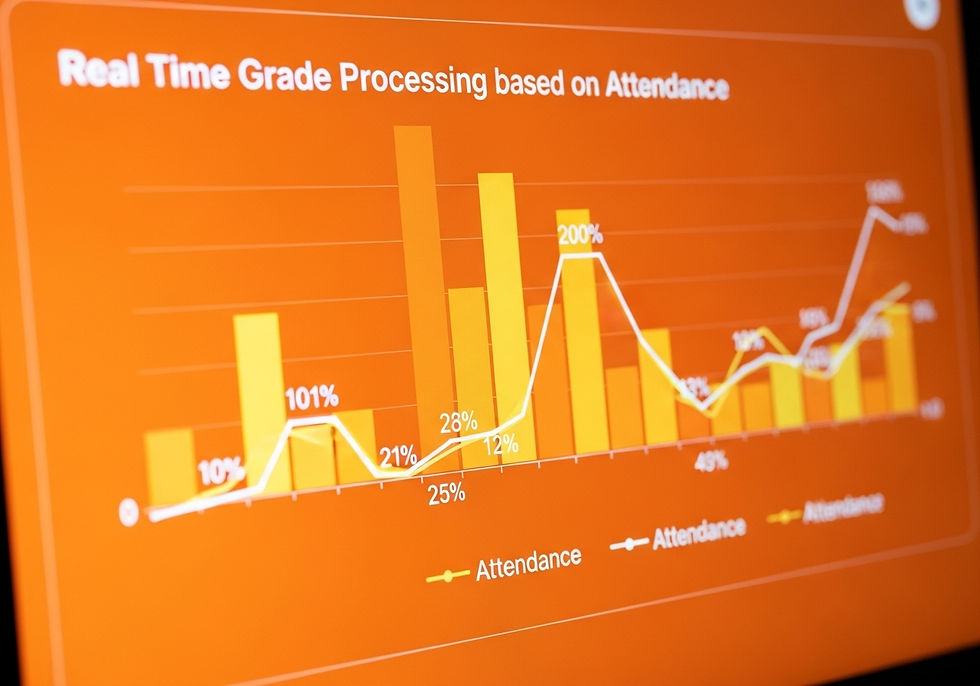
Real-Time Grade Processing from Attendance Data
With School Bright, once teachers record attendance via the app or students check in using face scan, the data is instantly sent to the academic system.
The system automatically calculates exam eligibility and participation scores. If a student’s attendance falls below 80%, alerts are immediately sent to both teachers and parents.
FAQ Section
How do disconnected systems impact schools?
They increase teachers’ workload, raise the risk of errors, and make the school appear unprofessional.
Can School Bright truly connect attendance and grading systems?
Yes. Data flows automatically between administration, academic, and registration systems within a single platform.
How much time can teachers save with an integrated system?
Real user data shows administrative workload can be reduced by over 70%, and grading time reduced to just minutes.
Can existing Excel data be migrated to School Bright?
Yes. A dedicated team supports data import and system setup for immediate use.
Is student data secure in an integrated system?
Absolutely. School Bright uses global-standard cloud systems and is fully compliant with PDPA.
Conclusion
The issue of disconnected systems and duplicate work is not just a technological problem—it’s a resource management issue. Allowing teachers to be overwhelmed by repetitive administrative tasks limits their ability to focus on education. School Bright is the key to unlocking staff potential, giving teachers back their time, and building a transparent, efficient school system that earns the trust of parents and moves toward becoming a top-tier Smart School.
For more information about the School Bright click School Bright or to contact our team, please visit:
📩 Line: @JABJAI
📞 Phone: 02-096-2550
📧 Email: cs@schoolbright.co


